
INTERNATIONAL HEADLINE GUEST
🇬🇧 Workshop in English
Have you ever noticed you’re headless?
What if awakening is not something distant to achieve, but something surprisingly simple to notice?
In this playful, experiential workshop, Richard Lang — who has spent more than fifty years sharing The Headless Way — invites you to explore one of the most direct questions imaginable: who are you, from your own first-person point of view?
Through a series of simple, hands-on experiments, you will explore non-duality and anattā (not-self) directly, rather than only as ideas.
No belief is required. You are simply invited to look for yourself.
A festival ticket is required.
Don’t have one yet?
Explore ticket options →
-
Richard will guide you through a series of classic Headless Way experiments – simple, visual exercises to be tested in your own experience.
You will explore the difference between how you appear to others and what you find from your own first-person point of view.
The session is interactive, playful and responsive to the group.
-
This workshop is offered twice during the festival.
Each session stands on its own. Because Richard responds to the group and partly improvises, no two sessions will be exactly alike. You are welcome to attend one or both.
A separate reservation is required for each session.
-
The Headless Way is a direct, practical approach to self-inquiry developed by Douglas Harding (1909–2007) who was an English philosophical writer, mystic and spiritual teacher.
Richard Lang met Harding in 1970 and has since devoted his life to exploring and sharing this way of seeing.
It uses simple, direct “experiments” (such as pointing back towards where others see your face) to compare how you appear to others with what you find in your own direct experience.
-
This workshop is suitable for festival guests of all experience levels.
No previous experience of meditation or non-duality is required – only curiosity and a willingness to look.
A valid festival ticket and advance reservation are required.
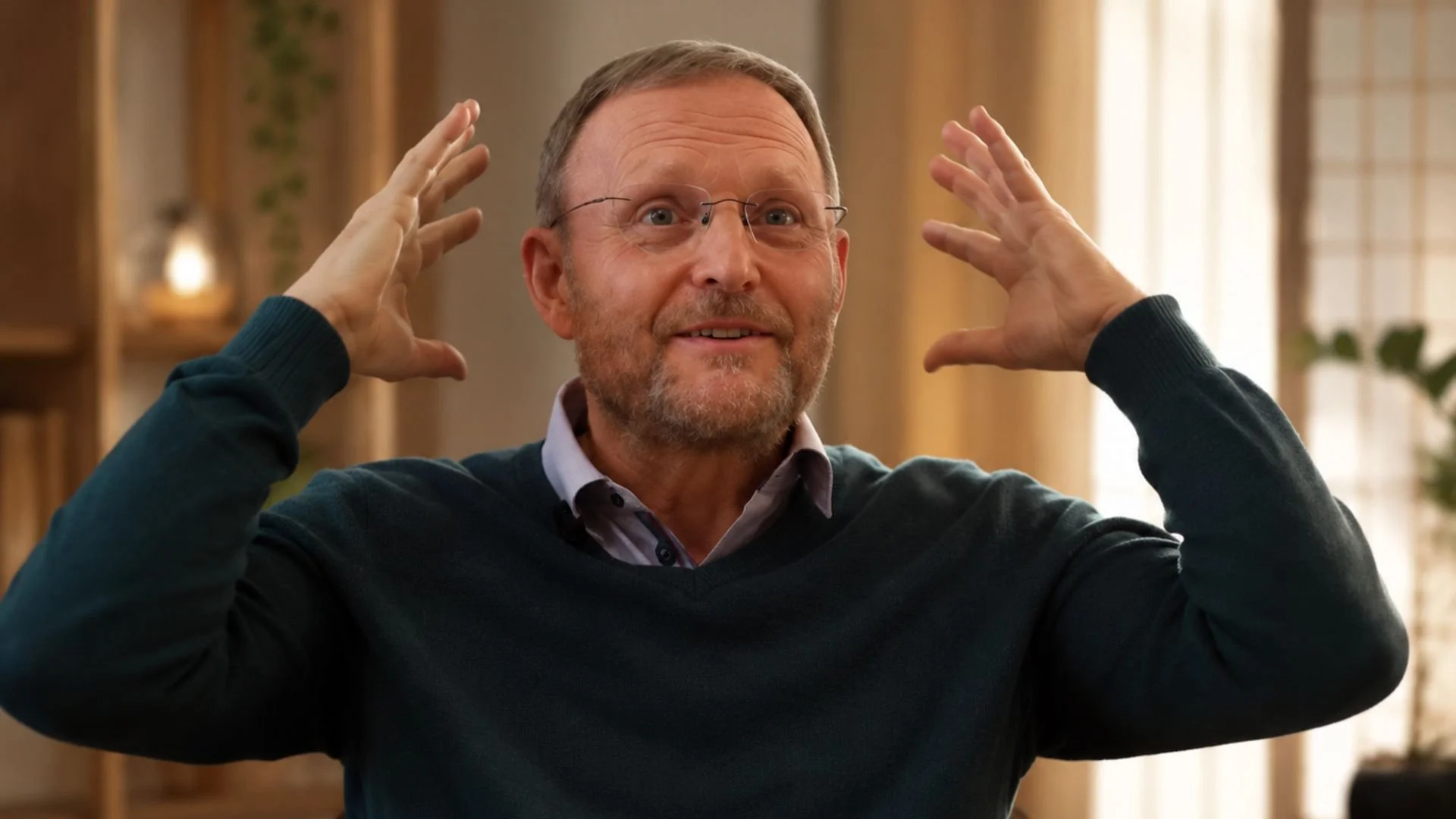
Meet Richard Lang
-
Richard Lang first saw who he really was in 1970 when he met Douglas Harding, author of On Having No Head.
Richard has been sharing this vision for more than fifty years, yet “every time I look and see Who I am, the Vision is fresh. And refreshing! What a wonder our True Self is!”
Books by Richard Lang:
Explore more:
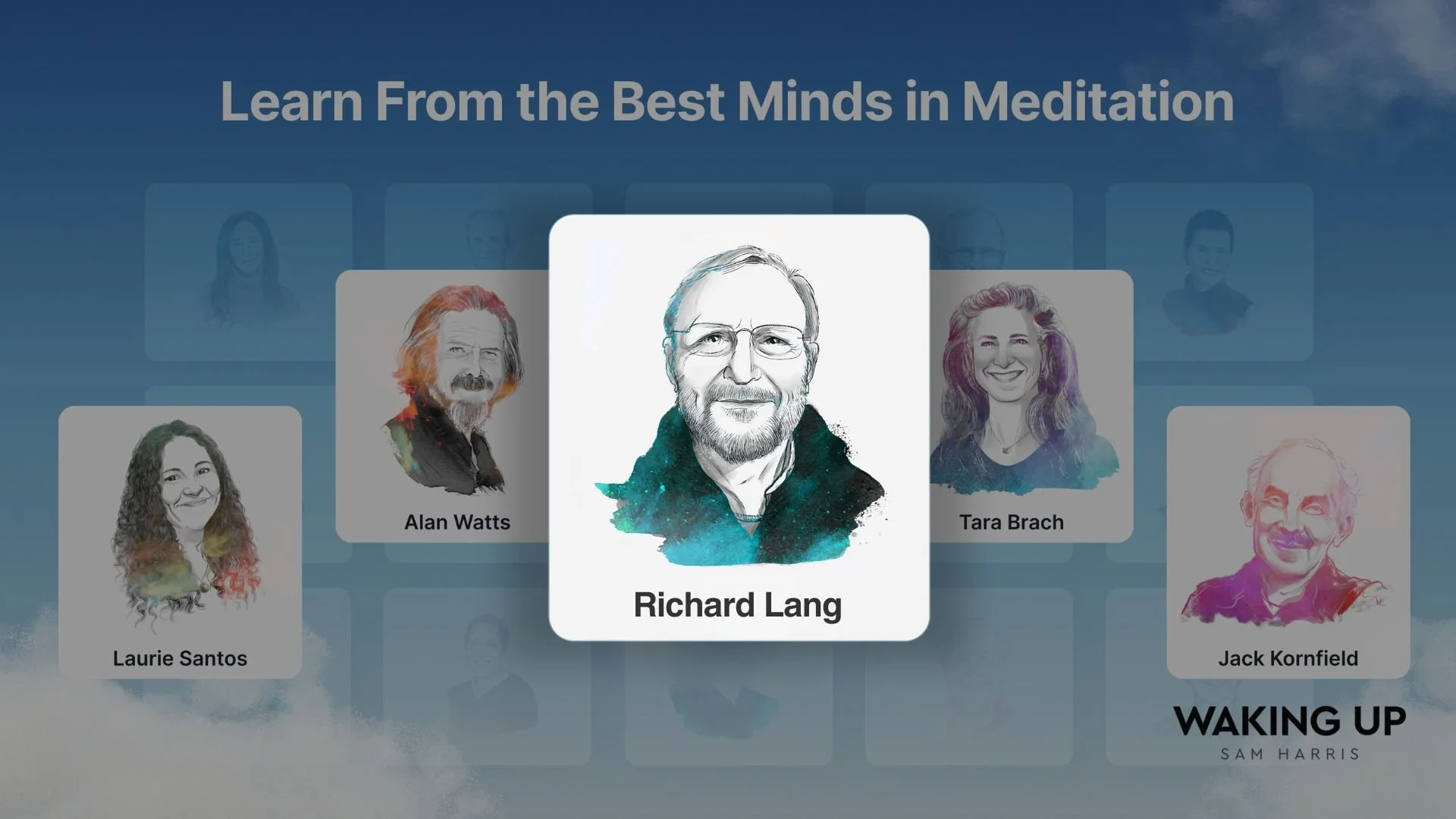
Richard Lang in Waking Up
Richard is featured as a teacher in Waking Up, the meditation app created by Sam Harris. His Headless Way teachings appear alongside those of internationally respected teachers such as Joseph Goldstein, Tara Brach and Jack Kornfield.
-
Simply Always Awake
Interview with Richard Lang by Angelo Dilullo.Buddha at the Gas Pump
Interview with Richard Lang by Rick Archer.“We don't have a head”
Talk with Richard Lang, presented by The Institute of Art and Ideas.The man with no head
A video of Richard Lang about the life and philosophy of Douglas Harding.
Dive deeper into
The Headless Way
↓
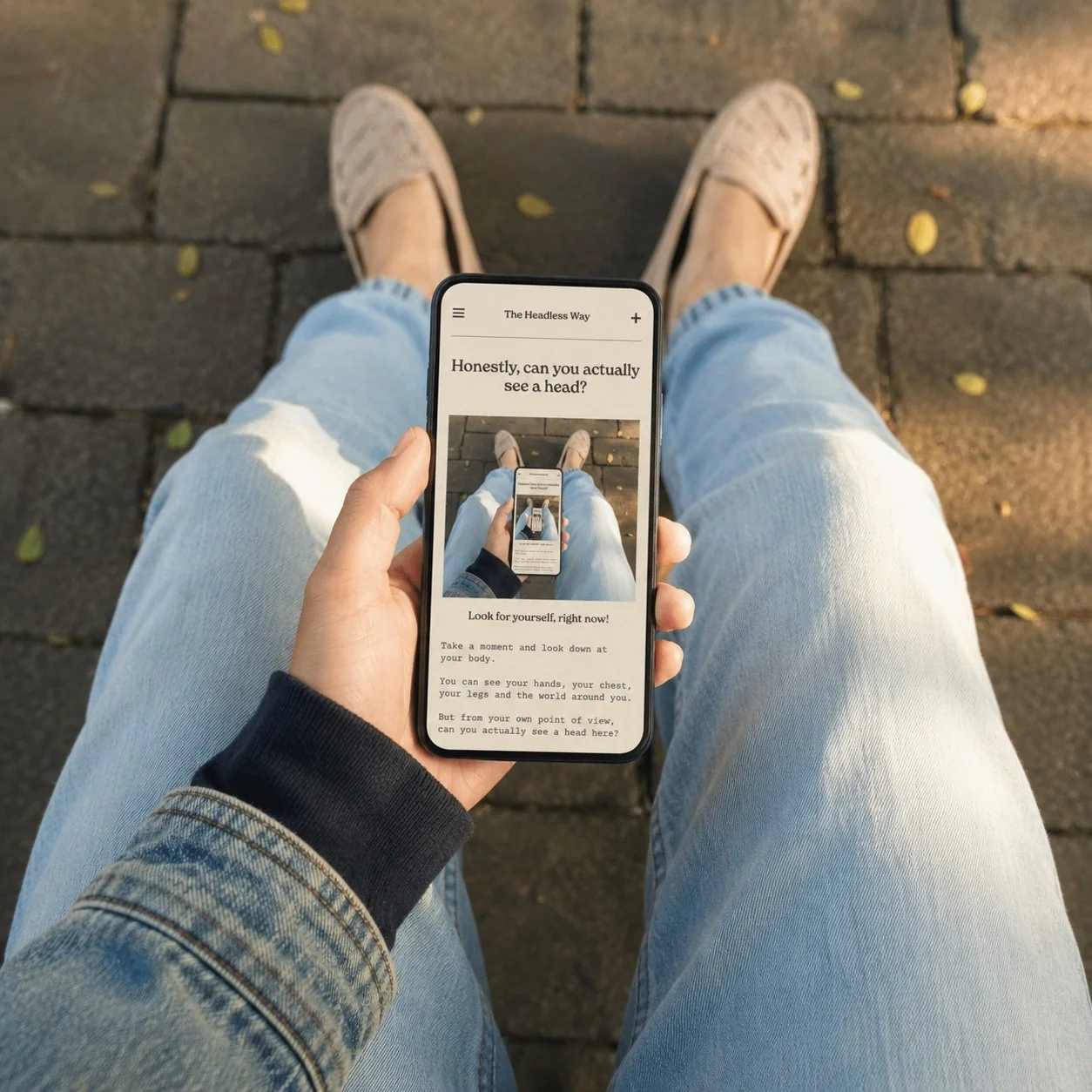
Look for yourself, right now.
Take a moment and look down at your body.
You can see parts of it — your hands, arms, legs, belly and chest.
To others, of course, you have a head.
But from your own point of view, can you find a head anywhere in your field of vision?
Don’t answer from memory or from what you expect to see. Simply notice what is actually present.

The Headless Way begins with a simple but surprising shift:
from the image of yourself
– a person with a head –
to your own direct experience
– open, headless awareness.
It does not deny how you appear to others. It invites you to notice the difference between that public image and what you actually find from your own point of view.
Explore more
↓
What lies below your bottom line?

Now look down at your body once more.
Bring your attention to the place where your chest fades from view, at the lower edge of your visual field.
In The Headless Way, this is called your bottom line.
What, if anything, lies below it?
“Being Awake means not overlooking the mystery below your bottom line”
– RICHARD LANG
-
From your own point of view, notice the unusual arrangement of your body: your feet near the top of your visual field, followed by your legs, belly and chest, before the body fades from view.
Does your body appear both headless and upside down?
What, if anything, lies below your bottom line? And what appears above it?
Don’t settle for the description. Look for yourself.
Four Stages of Life


No head. No problem.
We begin life fully immersed in experience. Gradually, we learn to see ourselves from the outside – as a face, a name and a separate person in the world.
The Headless Way traces this journey through four stages – and points to the possibility of consciously rediscovering our natural “headless” openness.
-
1) THE BABY
Headless without knowing it
Before language and a public identity has taken shape, the baby lives from the first-person view — without yet consciously knowing itself as a face, a name or a person seen by others.
The baby has not yet learned to see itself through the eyes of others or identify with the face in a mirror.
2) THE CHILD
Learning to become someone
Through language, mirrors and other people’s responses, the child learns to see themselves from the outside.
A face, a name and a social identity begin to take shape.
3) THE ADULT
Becoming the person in the mirror
The external view gradually becomes dominant.
We identify with our appearance, personality and personal story, experiencing ourselves as a separate object in the world.
4) THE SEER
Headless and aware
The Seer rediscovers the first-person view without abandoning the human person. For others, a face and a story; from here, an open capacity for the world.
Not becoming nobody – but discovering that being somebody is only one side of who you are.
Venue ↓
Stora tältet • Hotel Botnia
This session takes place in Stora tältet at Hotel Botnia — the festival’s largest venue.


Good to know
• Plan your festival weekend so you have time to arrive, settle in and move between venues without rushing. Read more: Questions & Answers
• Avoid booking sessions that overlap or run back-to-back. Give yourself some space simply to be – not only to do.
